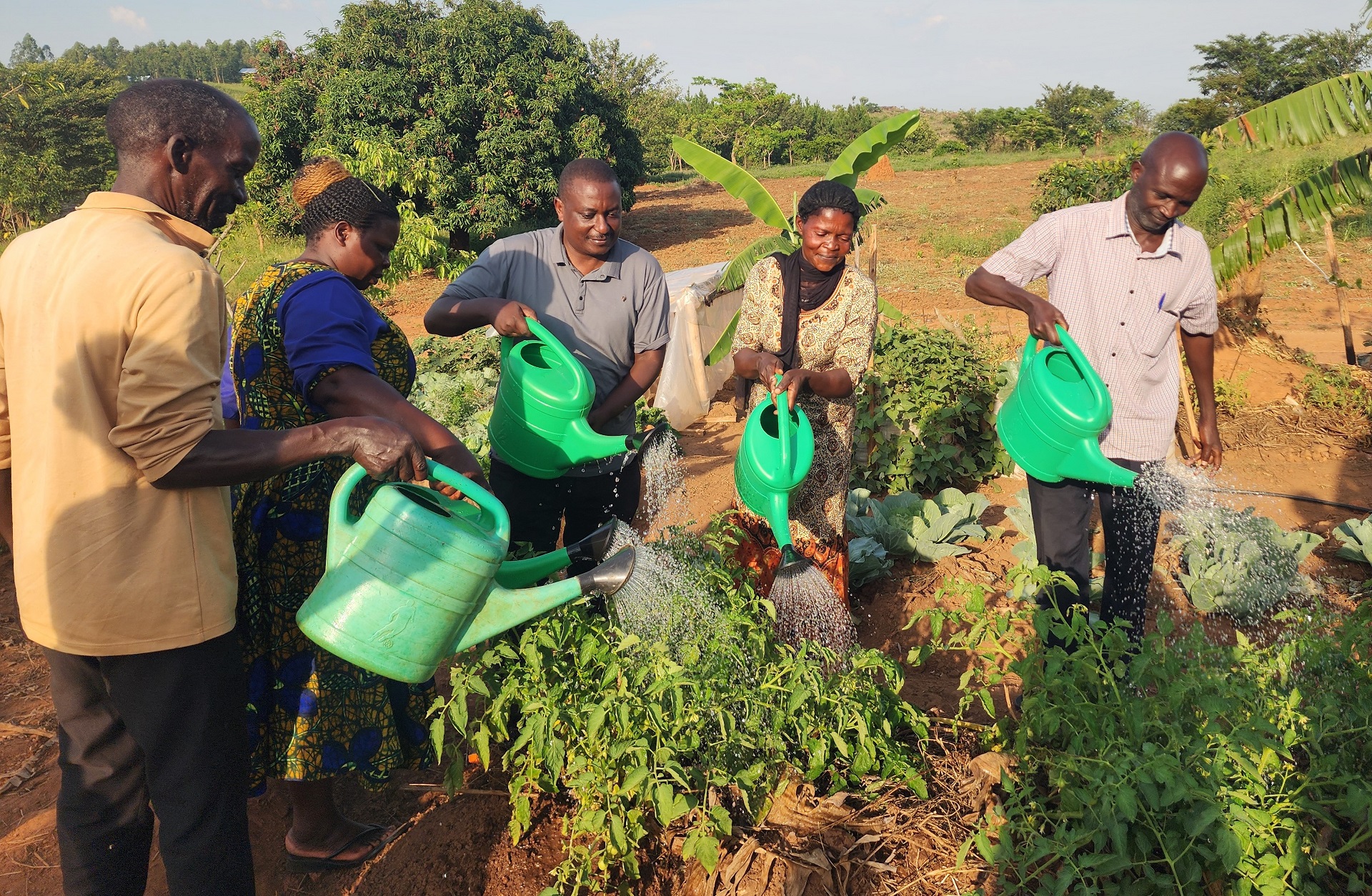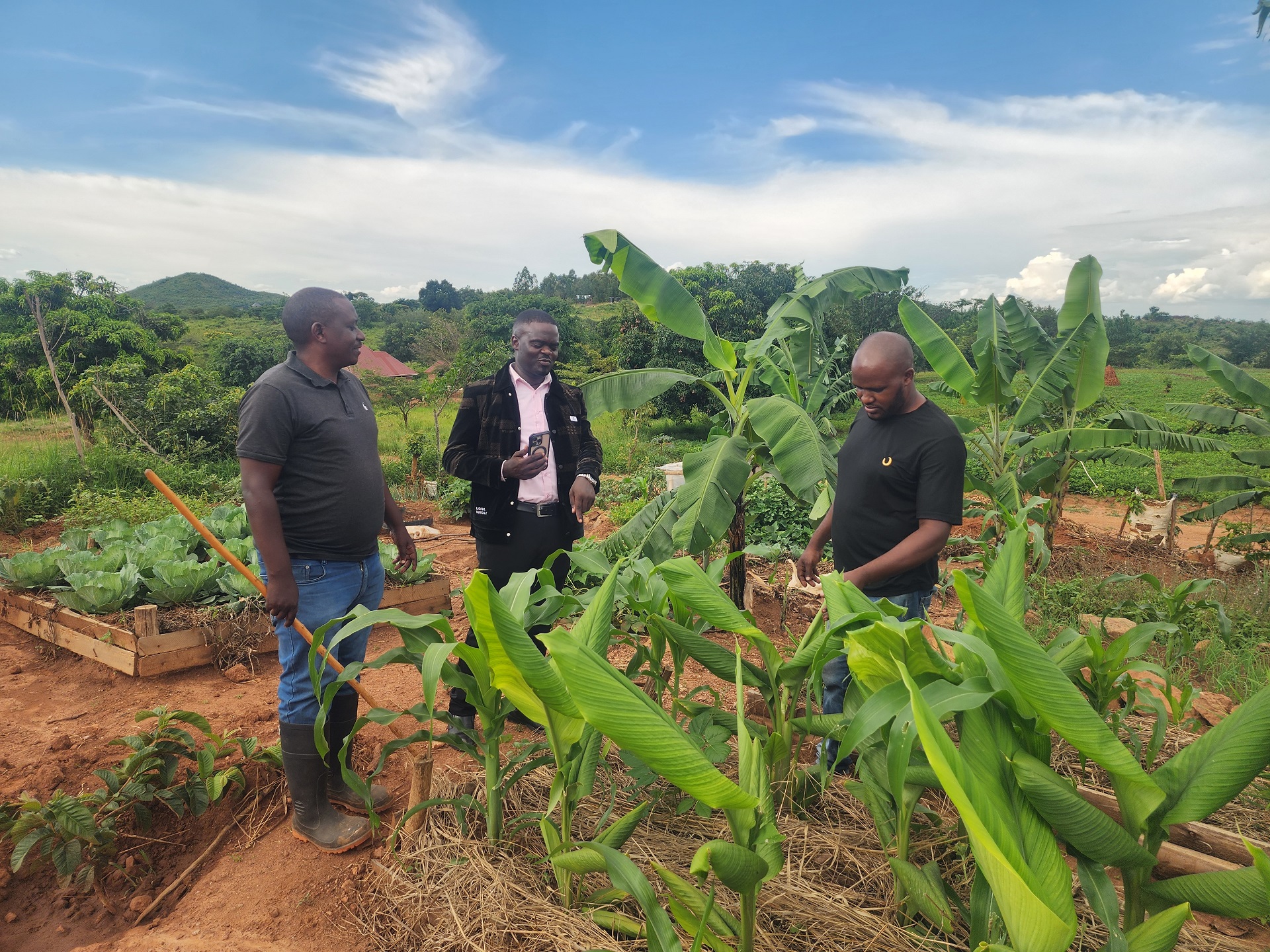
In a strong show of support for sustainable and climate-smart agriculture, Dr. Edward Kikabi, the Member of Parliament for Ntwetwe constituency in Kyankwanzi district, paid a visit to the AIBIS Agroecology Demonstration Farm on May 26th, 2026. The MP was accompanied by Mr. Davis Kato, a prominent farmer from the neighboring Kiboga District.
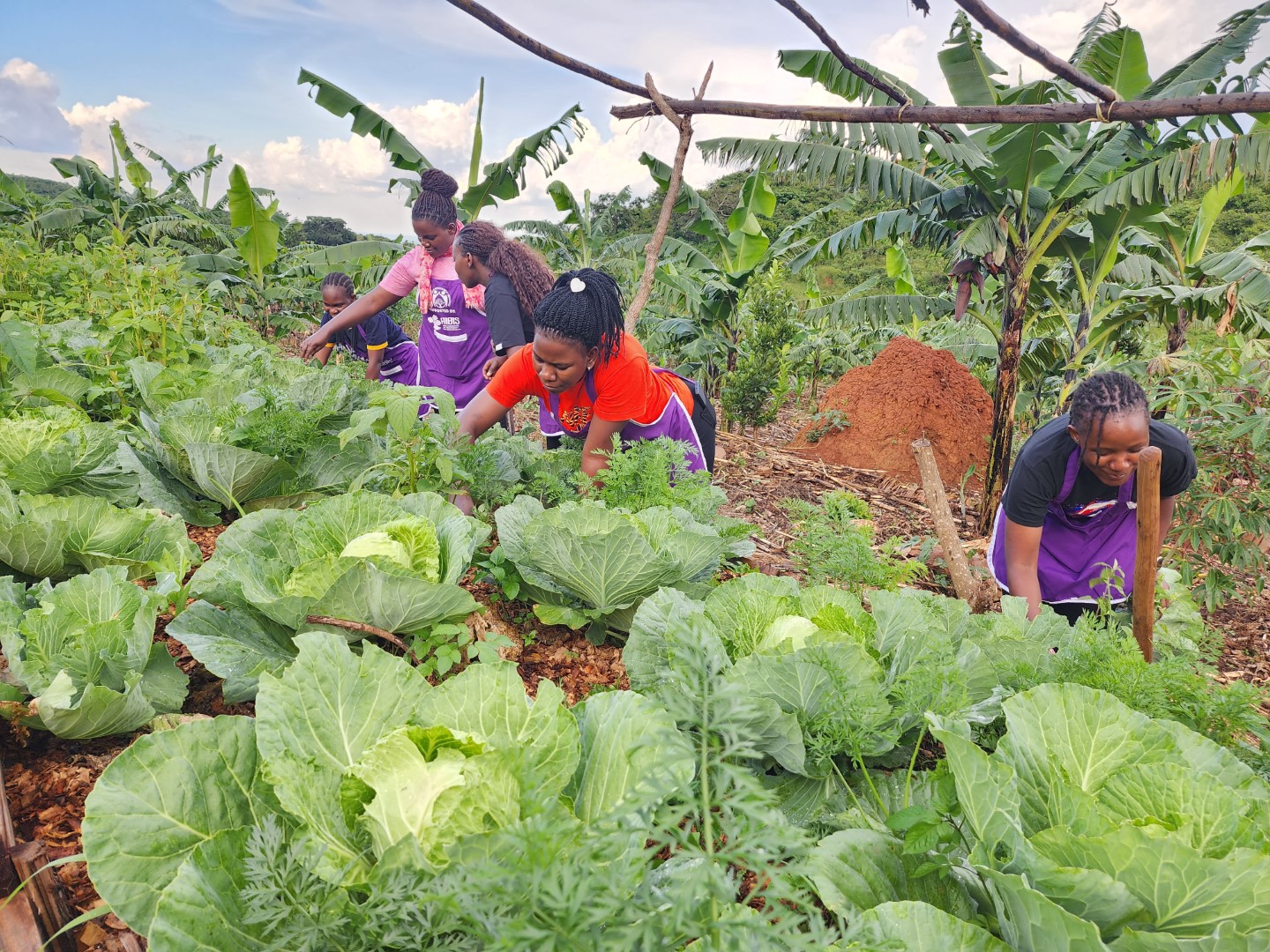
During the visit, Dr. Kikabi was given a comprehensive tour of the facility by Mr. Allan Kalangi, the Executive Director of the African Institute for Biodiversity and Sustainability (AIBIS). The farm stands as a beacon of resilience in an area hard-hit by climate change, operating strictly on agroecology principles.
Mr. Kalangi showcased several innovative agricultural practices, including rainwater harvesting using tarpaulins and the successful cultivation of vegetables in the hot, harsh climate. Most notably, the MP witnessed a thriving banana plantation situated on a piece of land previously dismissed by many as barren. The tour also highlighted sustainable livestock integration, featuring goat rearing and free-range chicken farming.
Dr. Kikabi expressed profound satisfaction with the innovations at the farm, noting his long-standing interest in organic farming. He revealed that he had heard about the AIBIS Agroecology Demonstration Farm during his political campaigns but had been unable to visit until now.
“There are many important things at this farm that my constituents need to learn from,” Dr. Kikabi remarked. He further commended the government’s decision to select the AIBIS Farm as a designated training center under the Parish Development Model (PDM) programme, a move that will undoubtedly scale up local agricultural knowledge.
The legislator pledged that during his tenure, he will champion efforts aimed at promoting climate-smart agriculture, with a specific focus on organic farming. He emphasized his keen interest in food sovereignty as a vital mechanism for sustaining livelihoods and ensuring healthy lives in local communities.
Dr. Kikabi’s vision aligns perfectly with Uganda’s broader agricultural frameworks, such as the National Organic Agriculture Policy (NOAP) of 2019, which seeks to harness the country’s organic farming potential to boost food security, increase incomes, and conserve the environment. Furthermore, embracing agroecology directly supports the objectives of the National Agriculture Policy and the National Climate Change Act.
While Dr. Kikabi’s public endorsement is a significant step, experts note that Members of Parliament can play an even greater role in advancing agroecology in Uganda. Beyond localized support, MPs can advocate for increased national budget allocations toward agricultural extension services that specialize in organic practices. They can also push for legislative frameworks that protect indigenous seed varieties, sponsor bills that regulate the influx of harmful agrochemicals, and foster national markets for certified organic produce.