How AIBIS Transformed a Charcoal-Ravaged Rocky Landscape into a Hub for Environmental Restoration and Agroecology.
By Allan Kalangi
The land that no one wanted to buy
The old Nissan pick‑up truck squeaked and groaned as it bounced over a pot‑holed gravel road in Kapeke sub‑county, Kyankwanzi District. It was a hot Saturday afternoon in July 2020 and the four of us in the truck occasionally used our handkerchiefs, now browned with dust, to wipe sweat from our faces. I was at the wheel. I had two colleagues in the vehicle (a lady and a man) who just like me, were seasoned and experienced environmental practitioners and activists. For this article, they have preferred to remain anonymous. The fourth occupant was a land broker.
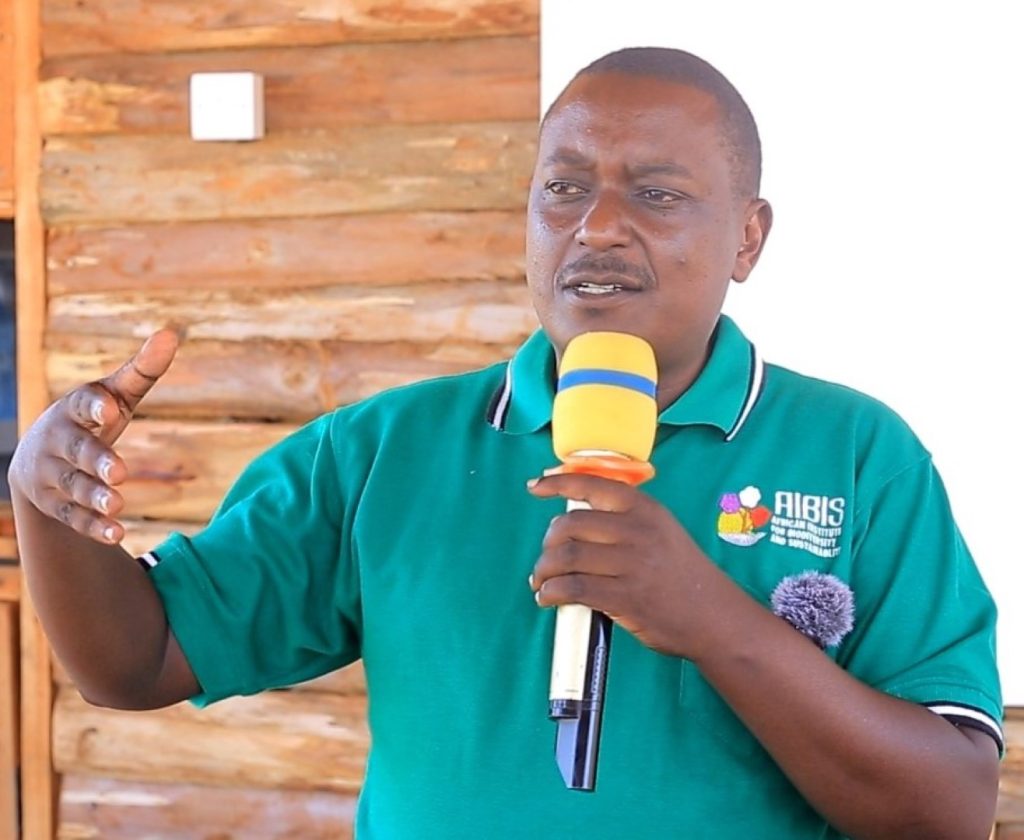
After years of doing environmental advocacy, my two colleagues and I decided to pool some savings to buy a piece of land where we could demonstrate practical conservation and sustainable farming good practices. The thought had become virulent to us that advocacy needed proof – messages to materialize and be made visible on the ground. What was needed therefore was land. We had for long been involved in and supported community struggles against environmental degradation, gross human rights violations including land grabbing and displacement of people in areas hosting large land-based investments. Uganda’s Albertine region was one such hotspot hosting the fossil fuel extractive industry and large sugar plantations that were putting pressure on community land as well as protected areas such as Kabwoya and Buseruka game reserves and Bugoma Central Forest Reserve. We had worked with farmers struggling to make decisions on whether to completely adopt growing of laboratory modified seeds or to keep growing the indigenous seed varieties that were being decampaigned by modern seed vendors, who were also promoting use of hazardous agrochemicals. We too had encountered communities that had cleared indigenous tree species from their portions of land in favour of the monocultural and alien pine plantations. We were therefore driven by a strong motivation to establish a one-stop centre for community forest management, non-timber forest enterprises and food sovereignty[1]. Kyankwanzi District was chosen because it borders Hoima District, the centre of Uganda’s oil exploration and production activities. Kyankwanzi district itself was listed among Uganda’s unsustainable charcoal burning hot-spots.
Our journey had started in the morning. Many of the parcels that the broker showed us were cleared, tree‑less paddocks resembling football fields. They had been prepared for exotic cattle rearing or monoculture agriculture. The broker was growing impatient. “If a person has no money, what business does he have trying to buy land?” he muttered during a phone call. Then, almost sarcastically, he said, “There is a piece of land for sale I know, but no one wants it. It is rocky and barren. Would you like to have a look?” We all agreed.
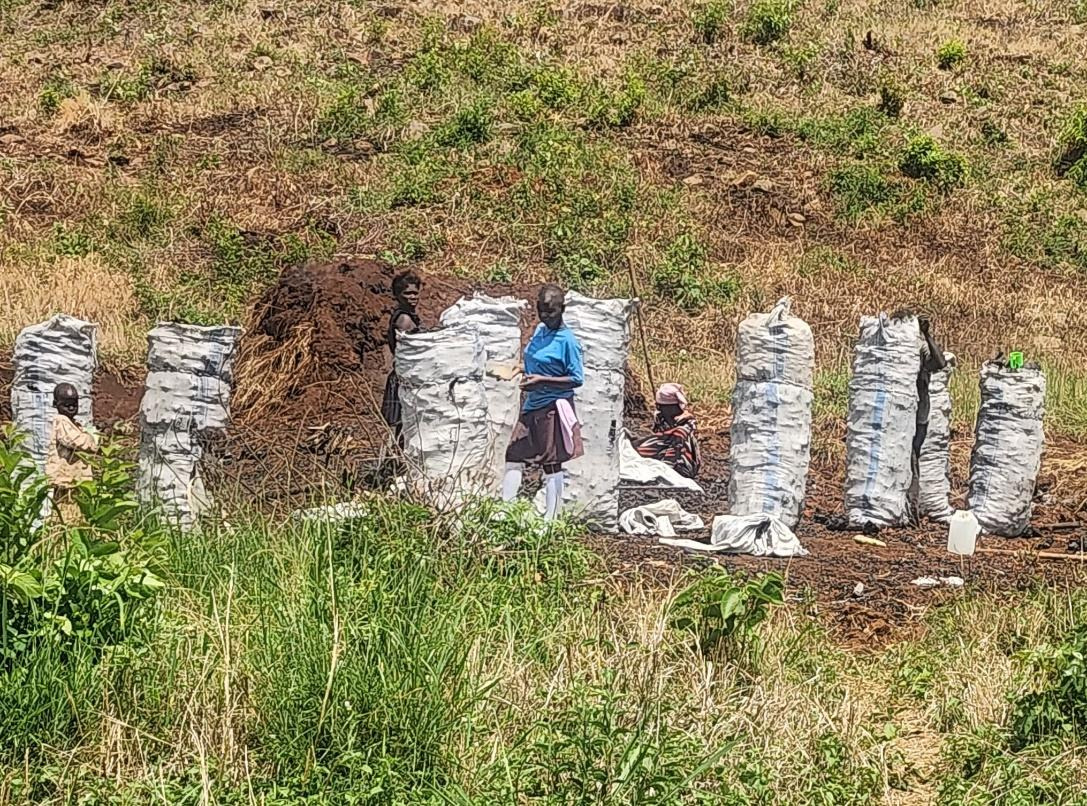
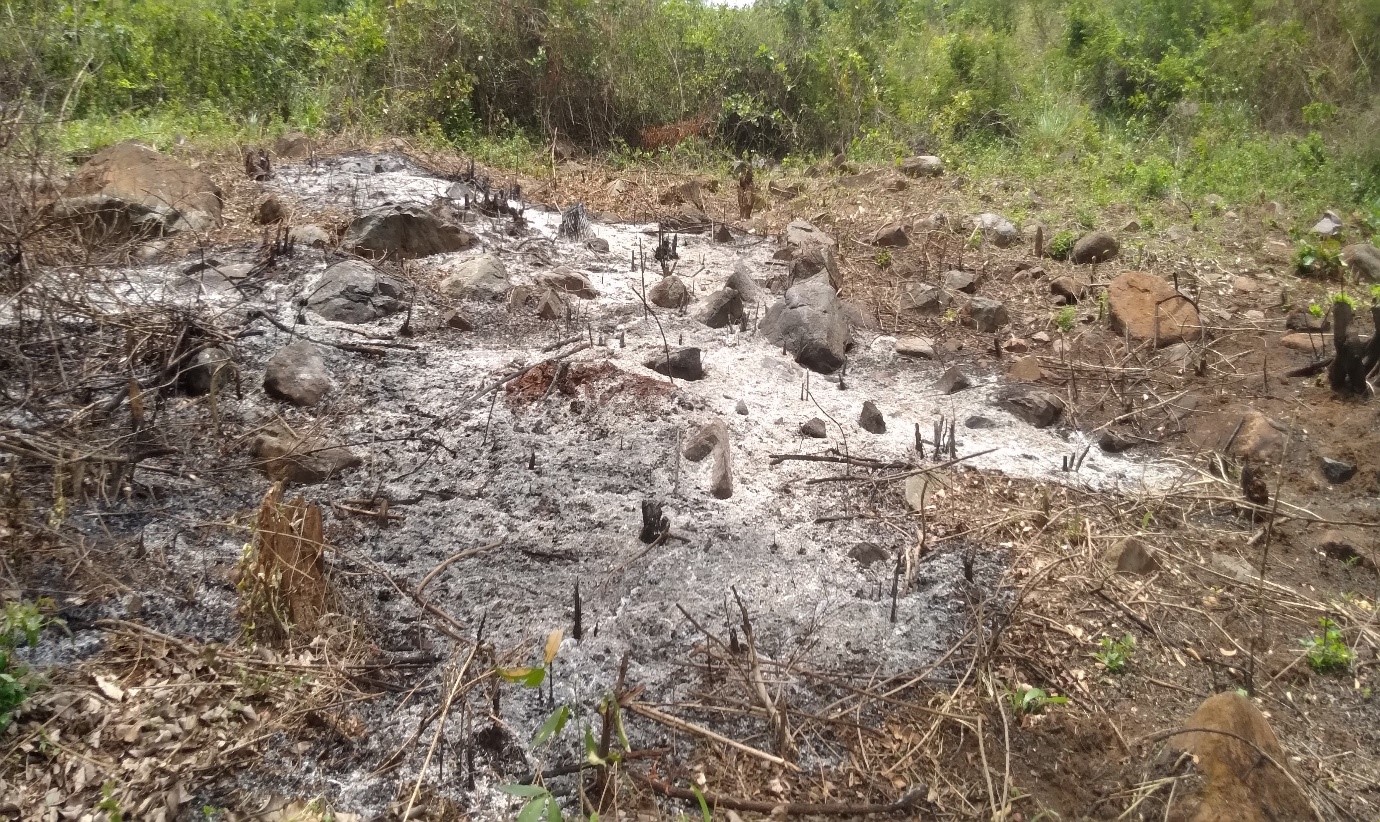
The plot lay in Kirangazi Village, in a remote part of Kalagi‑Masodde Town Council. At first glance, the land looked hostile: gaping ditches where road workers had excavated murram, rocky soil and no visible gardens or a natural water source. Numerous blackened patches where charcoal had been burned were visible. The owner explained that he used to earn some good income from charcoal burners until most of the larger trees were gone. He said that some limited charcoal burning was still taking place on the property but not so profitable anymore. Indeed, we could see places where charcoal had recently been burnt and some of it still on the site. What astonished us was the property seller’s seemingly lack of conscience about the dangers of charcoal burning or his individual responsibility in protecting the environment that he was living in.
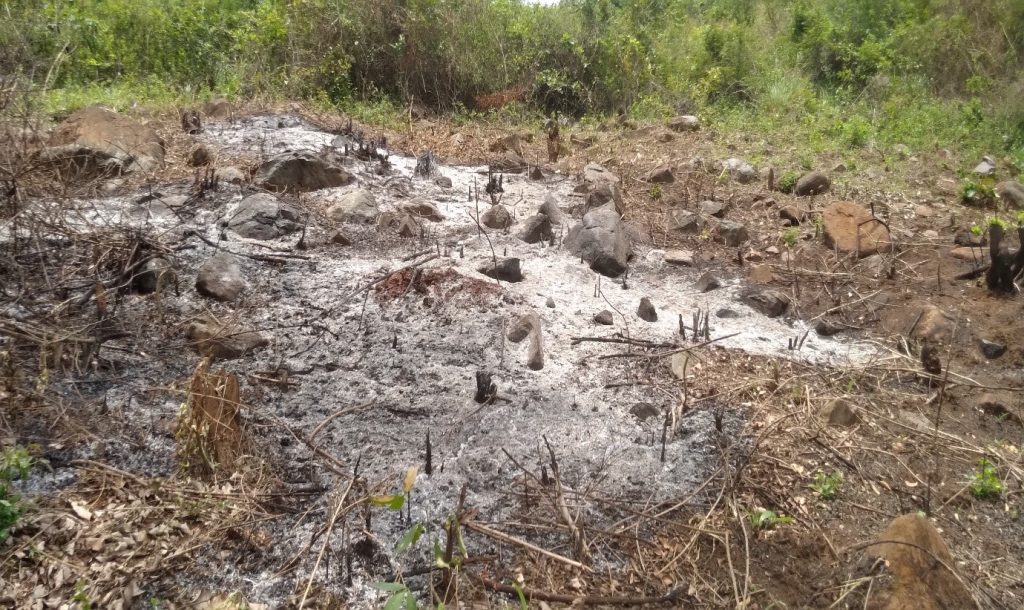
A closer look however, revealed something that we found so tempting. Shrubs with medicinal value, young forest trees regenerating after wanton cutting and several beautiful birds flying around. Thirty minutes on the land and we had decided. This 30‑acre patch was the place. Four months later, having pooled enough funds, we completed the purchase.
The birth of AIBIS
Two years after purchasing the parcel of land, we founded the African Institute for Biodiversity and Sustainability (AIBIS), with me as the Executive Director while the other two colleagues took on the roles of organisational promoters. We treated the purchased site and the host community as a microcosm of wider challenges prevalent in the country: charcoal burning, loss of tree cover, overuse of agrochemicals and the displacement of traditional seed systems by hybrids and store‑bought seed varieties. Our plan was simple: demonstrate that degraded land could be restored and made productive through agroecology and use that demonstration to persuade neighbouring communities and people from other parts of the country to adopt similar practices. We envisaged that if the communities could use their land sustainably in harmony with the existing ecosystems, they would get better yields and abandon bad practices such as charcoal burning.
Diagnosing the problems
Working with local volunteers and community groups, we identified the main drivers of environmental degradation in the area. First, it was the strong urban demand for charcoal: for example, about 82% of households in Uganda’s Capital City, Kampala, rely on charcoal for cooking, creating a steady market that drives tree cutting. Second was limited alternative income for rural households, making charcoal burning an attractive but destructive source of livelihood. Third was low awareness of individual responsibility for conservation.
Alongside charcoal pressure, AIBIS observed heavy reliance on agrochemicals among smallholder farmers; fertilisers, herbicides and pesticides used indiscriminately. This made farming more expensive, eroded soil health, threatened pollinators such as bees, and discouraged use of indigenous seed varieties. The community had a good number of successful small holder coffee farms. But even there, unregulated pesticide use risked harming bees and, in time, yields.
Applying agroecology principles.
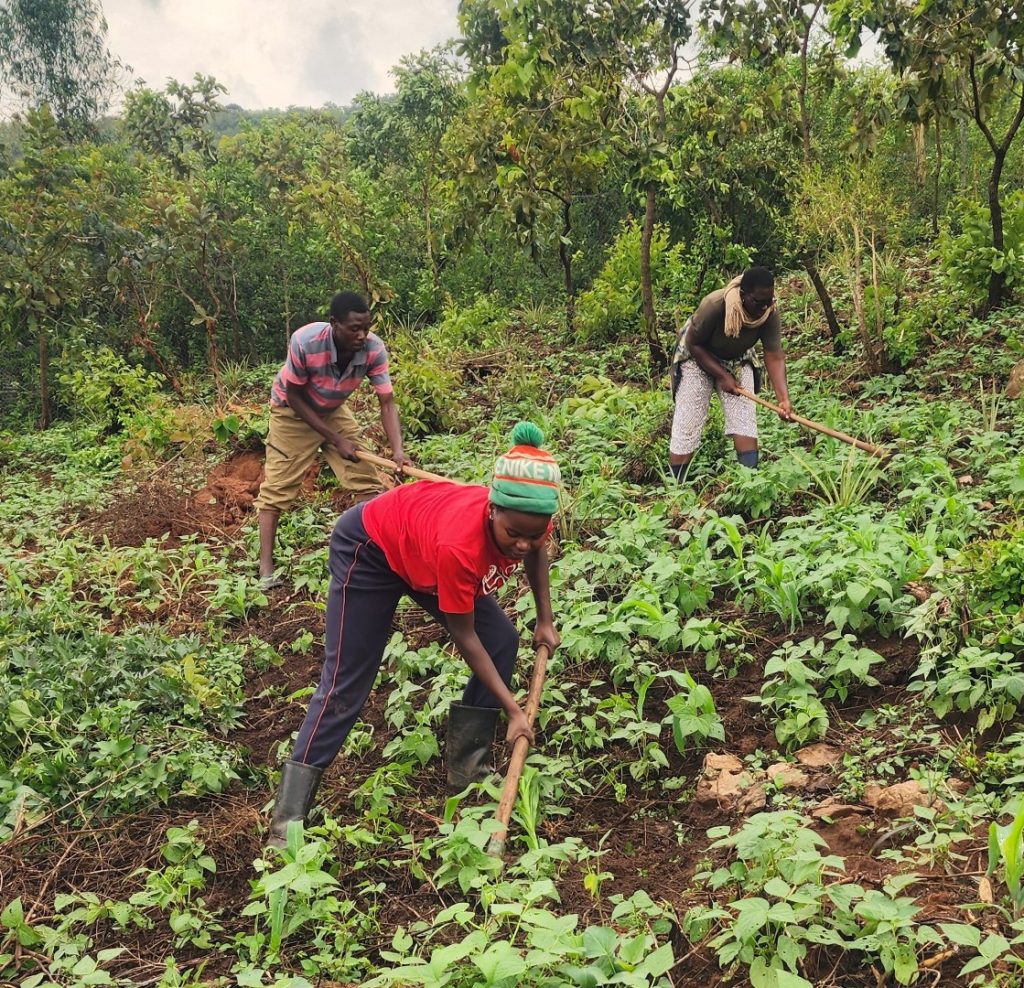
We divided the land into two zones: a conservation area for natural regeneration and reforestation, and a food‑production section to demonstrate agroecological methods. We selected agroecology because it integrates biodiversity, recycles nutrients, and respects traditional knowledge, three principles that fit the local context and the organisations’ goals.
AIBIS started by adopting three main agroecology principles: The first one was promoting biodiversity by integrating trees, bananas, vegetables and legumes, and keeping goats and chicken to close nutrient loops. The other one was building soil health through composting, mulching and organic manures rather than
chemical fertilisers. The third one was valuing traditional knowledge. The young organisation from the onset put emphasis on recognising and valuing the traditional and ancestral knowledge of local communities about sustainable agricultural practices adapted to local conditions
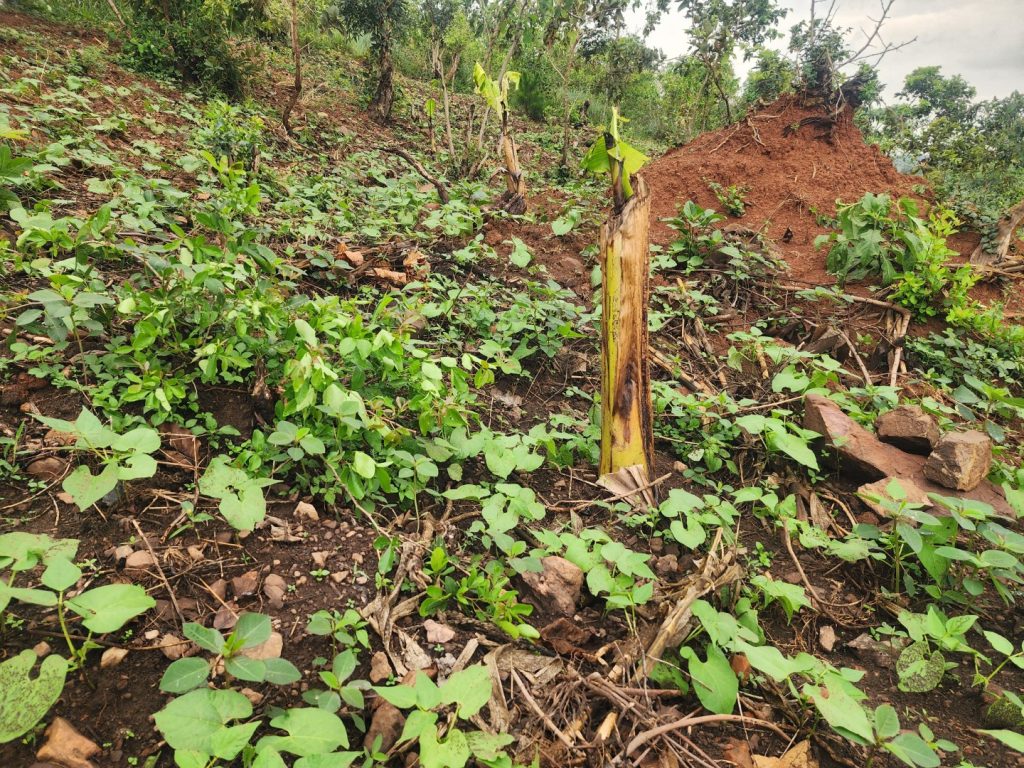
We started with the establishment of a banana plantation because it can act as a super garden. Bananas provide shade in which beans, tomatoes, pumpkins, and fruit trees can flourish. Because Kyankwanzi District usually experiences hot dry spells and is water‑stressed in many areas, we had to emphasise mulching to protect soil moisture and reduce weed pressure without using herbicides.
Early results
Within six months, the farm registered strong results. Vegetables, pumpkins and legumes produced bumper harvests. In the designated conservation area, the trees that were regenerating continued to grow bigger and taller now that there was no one disturbing them. After eighteen months, banana bunches being harvested were all large and healthy. Everything was grown organically.
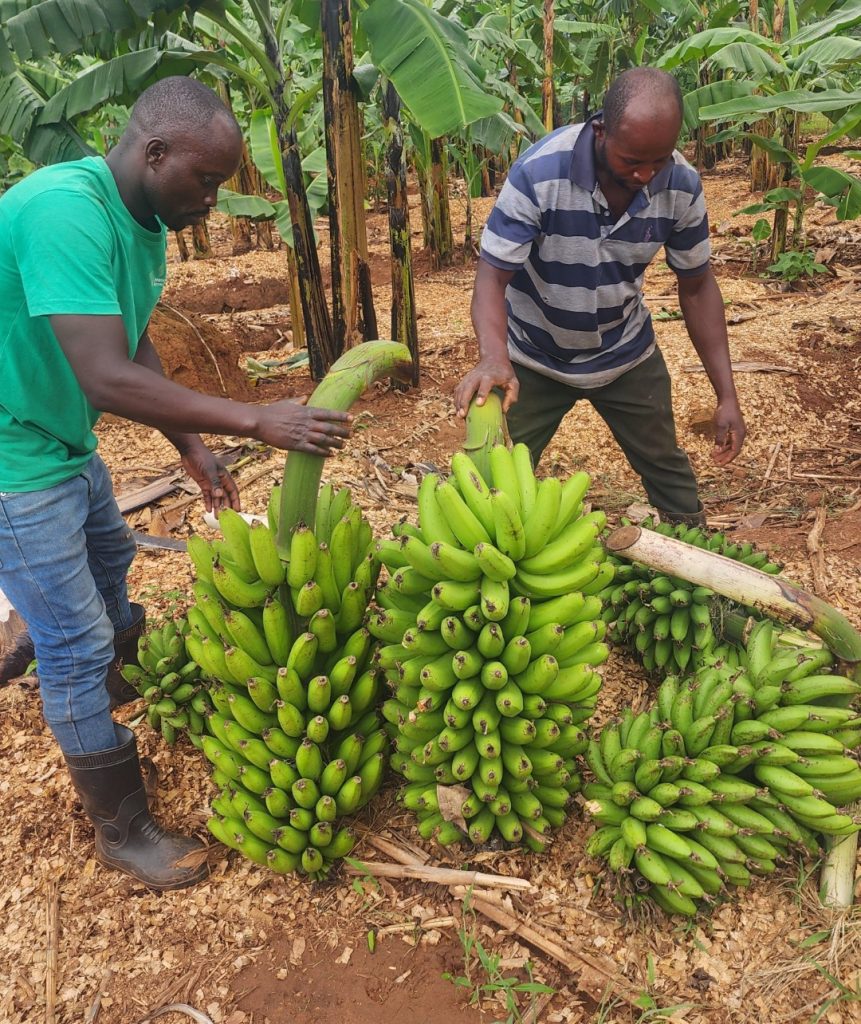
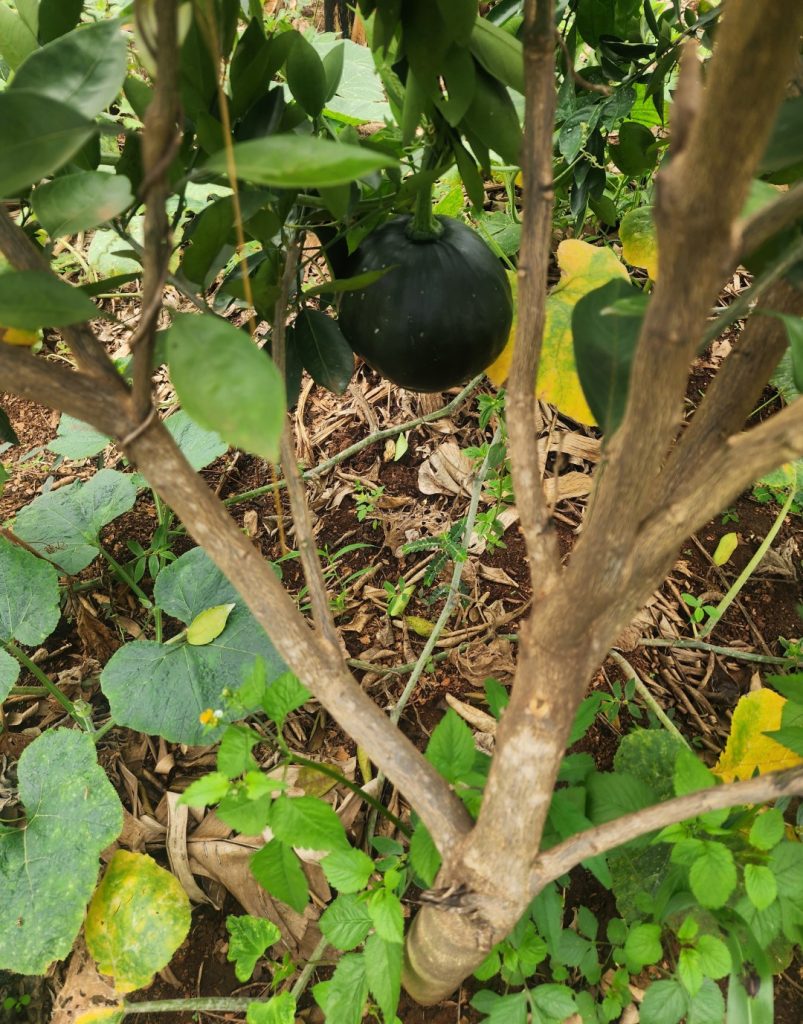
A bumper banana harvest left) and pumpkins growing together with oranges (right) at the AIBIS Farm
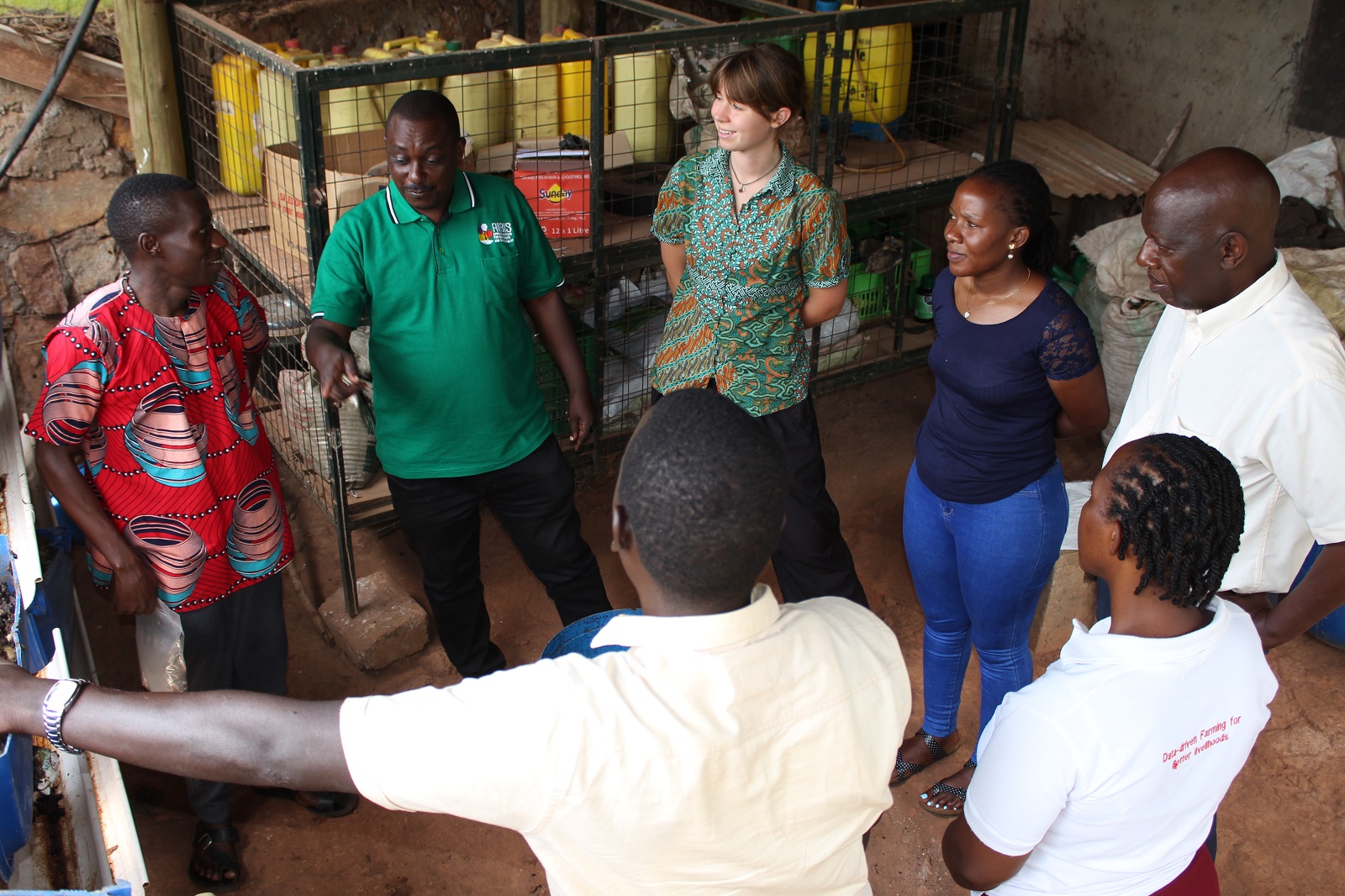
The visible success attracted the curiosity of neighbouring community members that had long regarded that land to be barren. AIBIS seized the opportunity to train those interested in establishing agroecology gardens on their own land and to sensitise them about the dangers of environmental degradation.
Availability of ready fruits at the farm
and other food stuffs motivated the youth in the community to come around many times and participate in voluntary work. Sometimes they would also be given small allowances from money obtained from sale of farm products such as matooke (bananas). This remains a big plus for AIBIS because some of these youths were the very ones involved in charcoal burning but are now turning away from the act because of being shown alternative ways of earning their livelihoods.
The organisation’s outreach capacity was limited at first: training and knowledge‑sharing trips were constrained by resources. Scaling up would require stronger partnerships and funding.
Partnership with Partner für Klima und Nature (PKN)
In June 2025, Germany‑based Partner für Klima und Nature (PKN) agreed to support AIBIS’s biodiversity conservation work. The first major AIBIS activity with PKN support was a botanical survey (taxonomy) of the conservation area to prioritise species for protection and identify trees with more economic and ecological value. With PKN’s backing, we expanded trainings, promoted non‑timber forest enterprises such as beekeeping, and scaled up reforestation by planting tree seedlings both on AIBIS land and on plots owned by trained community members who had the will to plant and grow the trees.
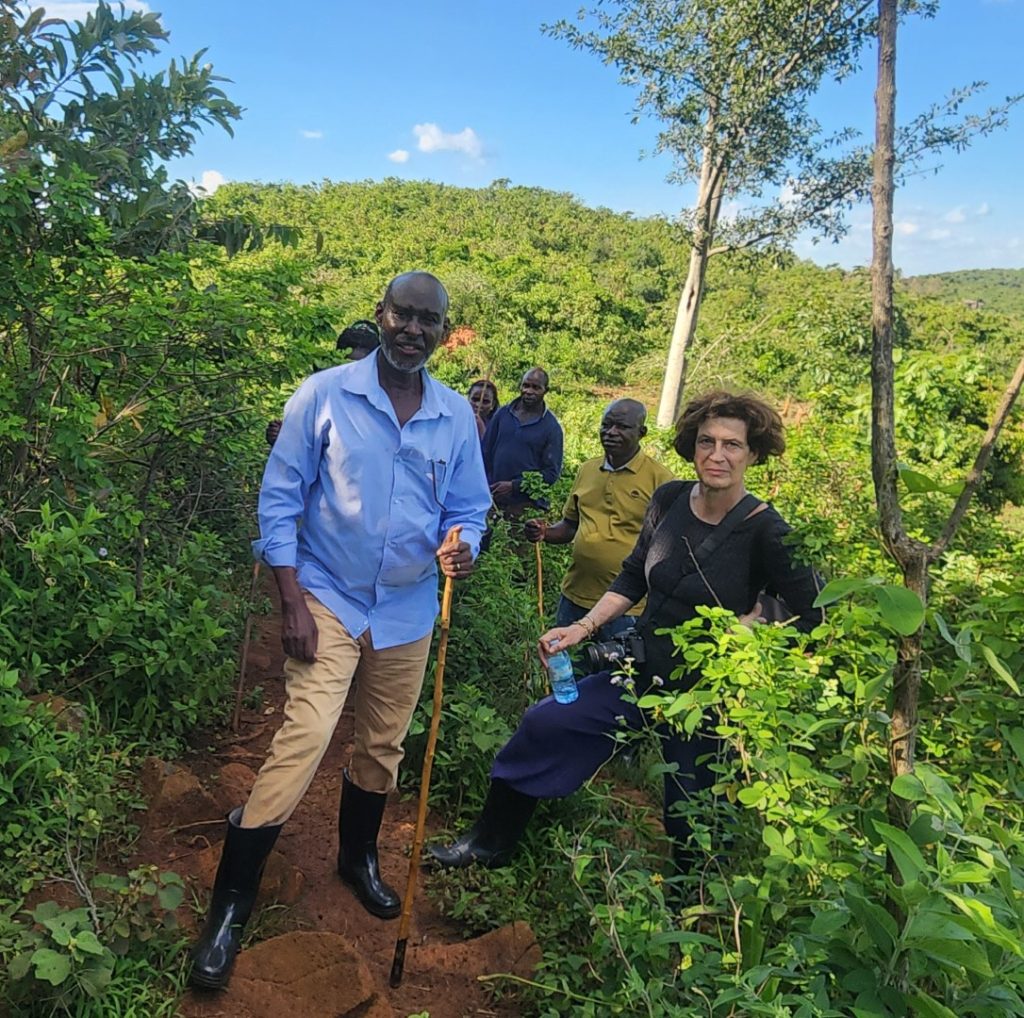
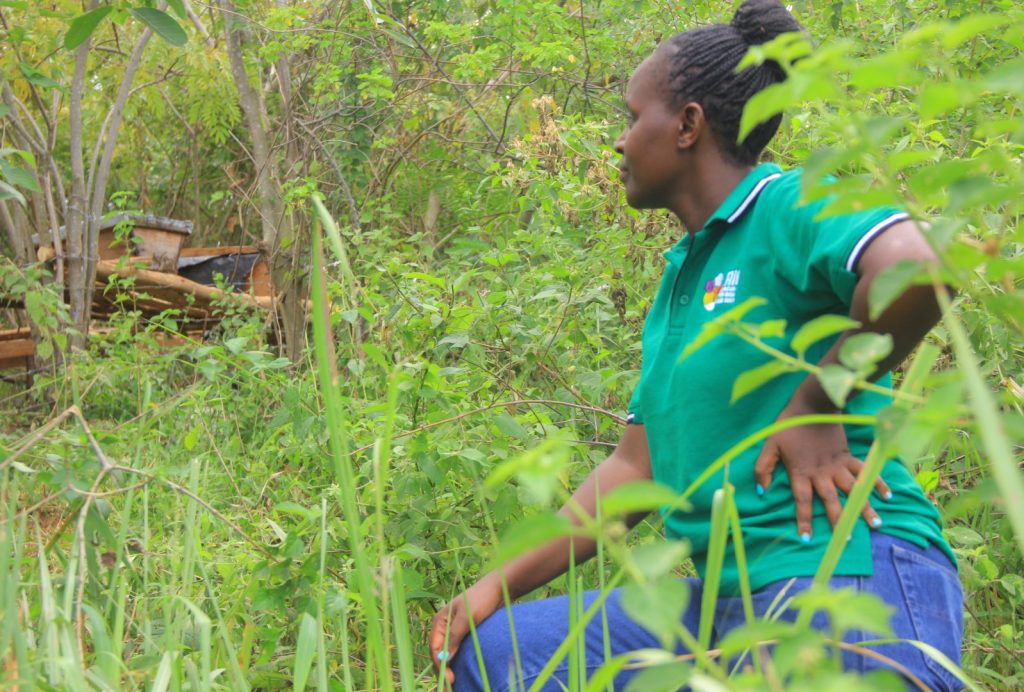
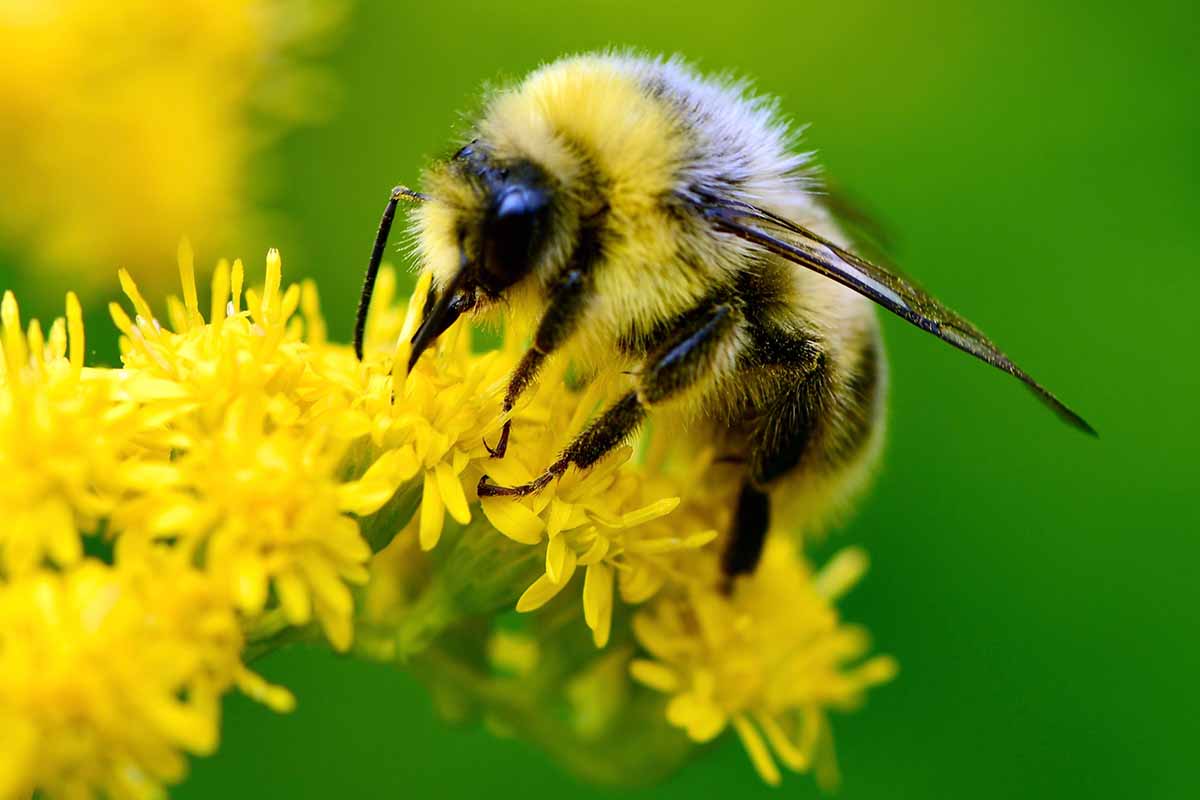
Beekeeping was emphasised because it is an income source and provides ecological services. Bees improve pollination for coffee and other crops, helping in securing healthy yields. PKN support also enabled AIBIS to convene larger, more diverse groups, raising awareness on agroecology and ecosystems conservation.
Rain water harvesting for irrigation.
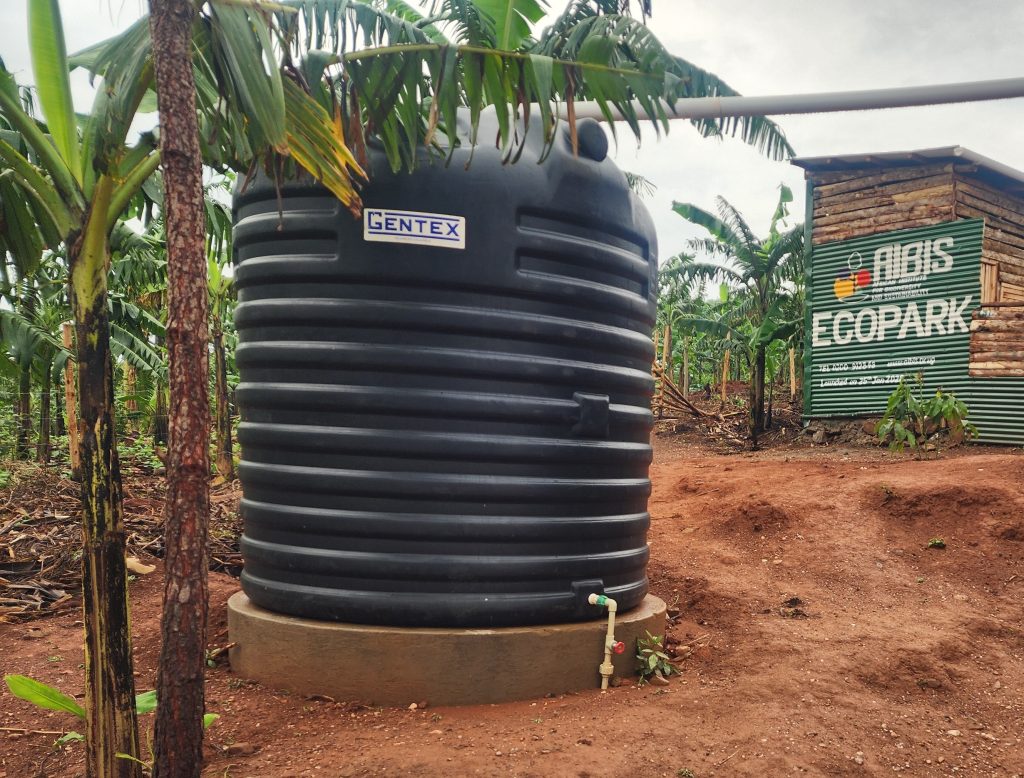
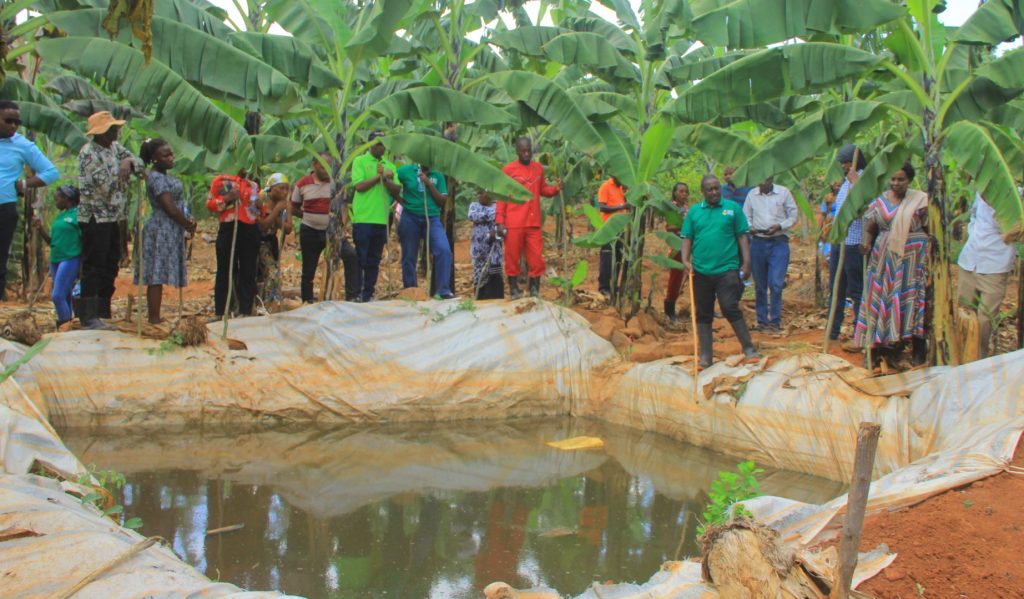
Since there was no natural source of water at the farm, we had to rely on rainwater harvesting using few plastic tanks and tarpaulins. With PKN’s assistance, AIBIS acquired additional tanks and built rainwater collection sheds. Reliable water availability made irrigation for crops and watering for animals possible and showcased practical resilience measures suitable for a water‑stressed areas.
Access to water also allowed us to establish a tree nursery centre to supply seedlings for reforestation in our own conservation area and to community partners (Project beneficiaries) The whole of AIBIS site is visibly transforming into a lush, green landscape.
Voices from the field
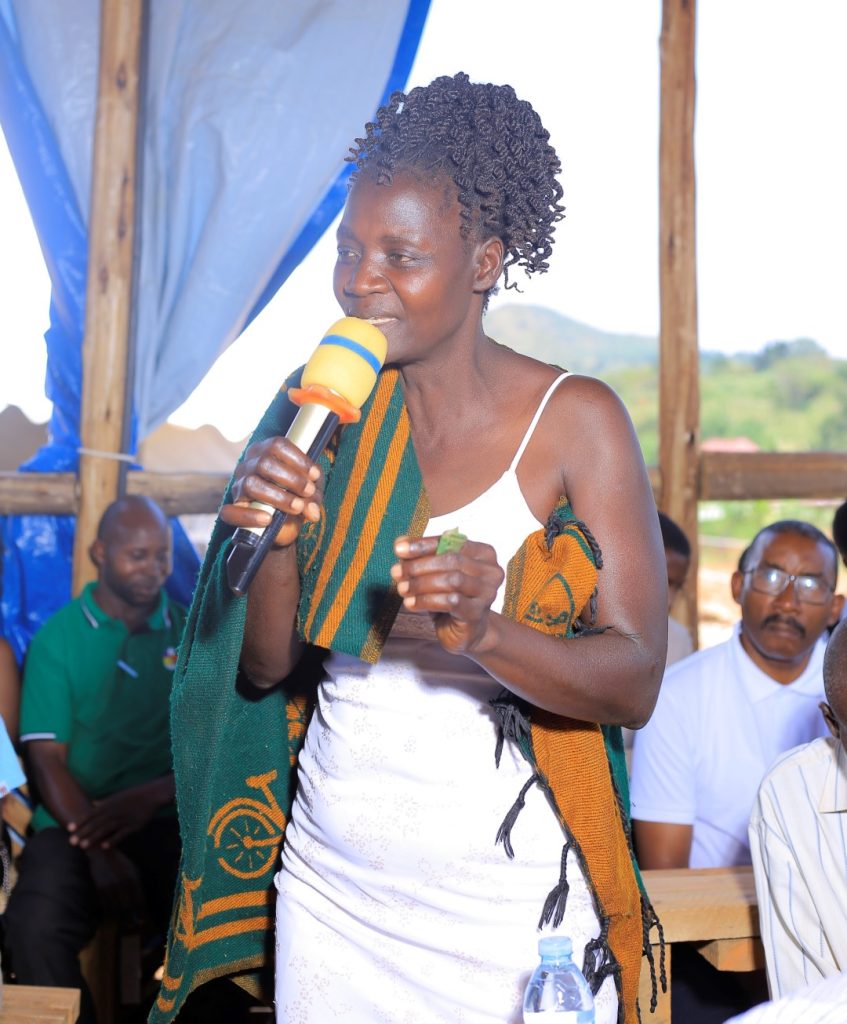
At a recent community engagement meeting, an AIBIS project beneficiary and a local Women Councillor, Annet Nantabadde, summed up the wonder many felt: “It is hard to believe that this rocky and seemingly barren place can produce such huge bunches of matooke. This is magical.”
Mr. James Byekwaso, the area Local Council One (LC1) Chairperson added: “What I have learned from AIBIS is that even a person with a small piece of land can participate in environmental conservation activities. Trees and crops can grow well together as long as there is proper planning.”
Plans ahead
We plan to continue sensitising and demonstrating good environmental and farming practices to communities, schools, civil society and policymakers. Replication is central: the team aims to support farmers to integrate agroecology into their lands and to scale reforestation and non‑timber forest enterprises.
Next article:
The next article will describe how AIBIS is developing the district’s first Ecopark — a combined education, conservation and income‑generating space designed to broaden the organisation’s reach and impact.
[1]Difference between food security and food sovereignty: Food security focuses on ensuring consistent access to sufficient food for all people. Food sovereignty on the other hand emphasizes the right of communities to control their own food systems, land, and agricultural policies, favoring local, sustainable production over corporate-controlled, global market.